

QR Code

About Us
Products
Contact Us

Phone

E-mail

Address
No. 22, Hongyuan Road, Guangzhou, Guangdong Province, China

A Flat Photoelectric Sensor is a compact optical sensing device widely used in industrial automation for detecting the presence, absence, or position of objects without physical contact. Compared with traditional bulky sensors, the flat design offers improved installation flexibility, space efficiency, and better integration into modern production lines. This article explains how a flat photoelectric sensor works, its core structure, advantages, real-world applications, and how to select and maintain it effectively. It also highlights practical insights from industrial implementation experiences provided by Fuwei, a manufacturer specializing in automation sensing solutions.
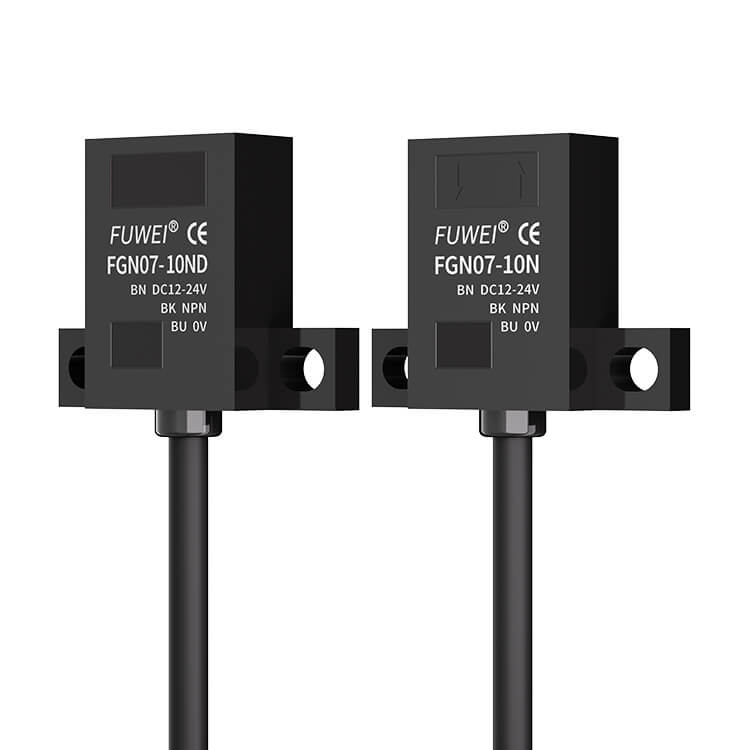
A flat photoelectric sensor is an optical detection device designed with a low-profile housing that allows it to be installed in tight or space-constrained environments. It operates using light emission and reception principles to detect objects without physical contact. Unlike cylindrical sensors, the flat design reduces protrusion, making it ideal for modern automated systems where space optimization is critical.
Manufacturers like Fuwei have developed advanced flat sensor models that integrate high-precision optics with durable industrial-grade housings, ensuring reliable performance even in harsh production environments.
The working principle of a flat photoelectric sensor is based on the emission and reflection or interruption of a light beam. Typically, the sensor consists of an emitter and a receiver:
When an object enters the detection zone, it either reflects, absorbs, or blocks the emitted light. The receiver interprets this change and converts it into an electrical signal, which is then processed by the control system.
This non-contact detection method ensures high-speed response and reduces mechanical wear, making it suitable for continuous industrial operations.
Fuwei integrates high-stability circuitry into its flat sensor series to minimize signal noise and improve detection reliability in complex industrial environments.
These advantages make flat photoelectric sensors a preferred choice in automation systems where precision and durability are essential.
Flat photoelectric sensors are widely used across multiple industries, including:
In many of these applications, Fuwei sensors are deployed due to their stability and adaptability in high-speed automated environments.
When selecting a flat photoelectric sensor, consider the following factors:
Fuwei provides technical support to help customers select optimized sensor configurations based on specific industrial needs.
| Feature | Flat Photoelectric Sensor | Traditional Cylindrical Sensor |
|---|---|---|
| Size | Compact and low-profile | Bigger and protruding |
| Installation Flexibility | High | Moderate |
| Detection Accuracy | High precision | Standard precision |
| Space Requirement | Minimal | Higher |
| Industrial Suitability | High-speed automation lines | General applications |
Proper installation ensures long-term stability and accuracy of flat photoelectric sensors. Follow these key steps:
Maintenance is minimal but important:
Fuwei recommends scheduled preventive maintenance in high-cycle production environments to ensure consistent performance.
Q1: Can flat photoelectric sensors detect transparent objects?
Yes, but specialized models or settings may be required for high transparency materials such as glass or plastic film.
Q2: Are they suitable for harsh environments?
Yes, industrial-grade models from manufacturers like Fuwei are designed to resist dust, vibration, and moisture.
Q3: What is the typical lifespan?
With proper installation and maintenance, these sensors can last several years under continuous operation.
Q4: Do they require calibration?
Most modern sensors come pre-calibrated, but fine-tuning may be needed depending on application conditions.
Flat photoelectric sensors play a crucial role in modern industrial automation by providing precise, non-contact detection in compact environments. Their ability to enhance production efficiency, reduce mechanical wear, and adapt to complex installation spaces makes them indispensable in advanced manufacturing systems.
With continuous innovation, companies like Fuwei are improving sensor reliability, integration capability, and application versatility, helping industries achieve higher automation standards.
For more technical details, customized solutions, or product inquiries regarding Flat Photoelectric Sensors, Fuwei is ready to support your industrial automation needs.
Contact us today to explore high-performance sensing solutions designed to improve efficiency, accuracy, and production stability in your operations.
No. 22, Hongyuan Road, Guangzhou, Guangdong Province, China