

QR Code

About Us
Products
Contact Us

Phone

E-mail

Address
No. 22, Hongyuan Road, Guangzhou, Guangdong Province, China

Abstract: Mini Photoelectric Sensors play a critical role in modern industrial automation, providing precise detection for a wide range of applications. This article explores the types, applications, specifications, and common questions surrounding Mini Photoelectric Sensors, offering a complete guide for engineers, technicians, and procurement specialists.
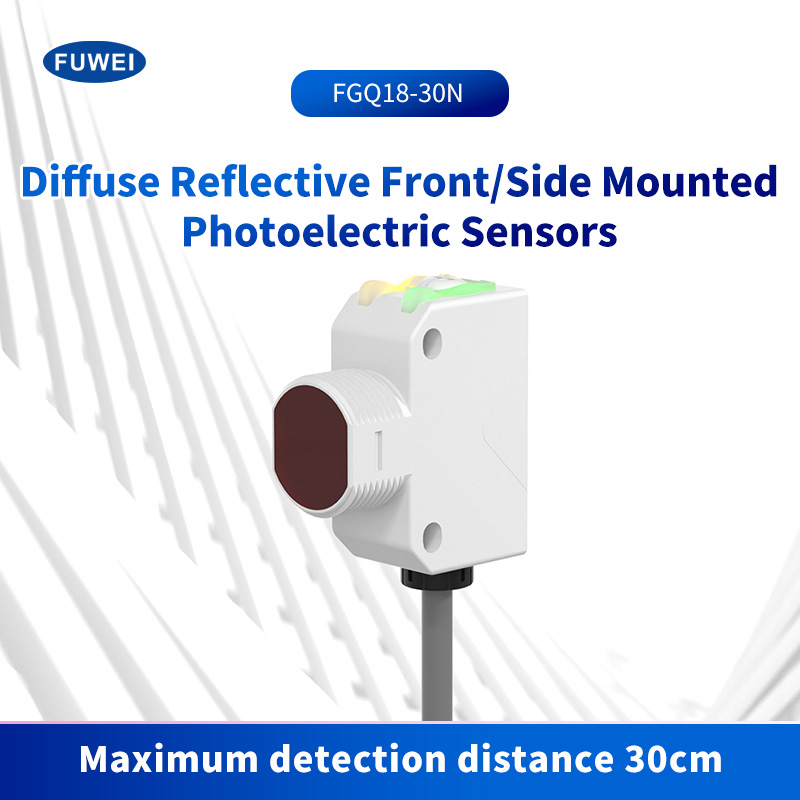
Mini Photoelectric Sensors are compact devices that detect objects, changes in surface conditions, or the presence of specific items using light transmission or reflection. Unlike traditional mechanical switches, these sensors offer high precision, fast response times, and long service life, making them ideal for integration into production lines, robotic systems, and automated machinery.
The central focus of this guide is to provide a thorough understanding of Mini Photoelectric Sensors, including how they function, what parameters define their performance, and how to select the right sensor for specific industrial tasks. This article emphasizes detailed specifications, practical applications, and answers to frequently asked questions in a professional, technical manner.
Mini Photoelectric Sensors vary by detection type, output mode, and operating environment. Below is a detailed table of typical parameters found in standard models:
| Parameter | Description | Typical Value |
|---|---|---|
| Detection Method | Through-beam / Retro-reflective / Diffuse-reflective | All types available depending on application |
| Supply Voltage | Operating voltage required for sensor | 10–30 VDC |
| Output Type | NPN / PNP, NO/NC selectable | NPN: Sinking / PNP: Sourcing |
| Sensing Distance | Distance at which objects are reliably detected | 2 mm – 200 mm |
| Response Time | Time required to detect and output signal | ≤ 1 ms |
| Operating Temperature | Temperature range in which sensor operates reliably | -25°C to +55°C |
| Housing Material | Construction material of sensor body | ABS / Stainless Steel options |
| Protection Level | Ingress protection against dust and water | IP67 |
Mini Photoelectric Sensors are widely used in industrial and automation settings due to their compact size and reliable detection capabilities. Some typical applications include:
These sensors are particularly valuable in environments where space is limited and high-speed detection is necessary. Integration with PLCs and microcontrollers allows for enhanced automation efficiency, reduced manual errors, and improved operational consistency.
Q1: How do Mini Photoelectric Sensors detect objects?
A1: Mini Photoelectric Sensors detect objects by emitting a light beam (infrared, visible, or laser) and measuring the reflection or interruption of that beam. Through-beam sensors detect objects when the beam is blocked, retro-reflective sensors detect objects when the beam is reflected back from a reflector, and diffuse-reflective sensors detect objects based on the reflection from the object's surface itself. Proper installation and alignment are essential for accurate detection.
Q2: What factors influence the sensing distance of a Mini Photoelectric Sensor?
A2: Sensing distance is influenced by the type of sensor, the intensity of the emitted light, object reflectivity, ambient light conditions, and the presence of dust or other environmental factors. Selecting a sensor with appropriate specifications and adjusting sensitivity settings can optimize performance in specific applications.
Q3: How can Mini Photoelectric Sensors be integrated into existing automation systems?
A3: Integration typically involves connecting the sensor output to a programmable logic controller (PLC) or microcontroller. NPN or PNP outputs allow for compatibility with various control systems, while proper wiring, voltage matching, and signal conditioning ensure reliable communication and minimize interference.
Fuwei specializes in high-quality Mini Photoelectric Sensors that meet rigorous industrial standards. The brand provides a wide range of sensor types suitable for assembly lines, robotics, and packaging machinery. Their products are engineered for precision, durability, and efficient integration into modern automation systems.
For more information or to discuss specific sensor requirements, contact us to get personalized solutions tailored to your industrial automation needs.
No. 22, Hongyuan Road, Guangzhou, Guangdong Province, China